Water is easy to overlook when a business is busy. Employees arrive, customers walk through the doors, equipment starts running, and the day gets moving. Behind all of that, water quietly supports cleaning, cooking, drinking, cooling, laundry, manufacturing, and countless other tasks.
Then a problem appears.
Maybe there is white scale around faucets. Perhaps equipment needs cleaning more often than expected. Maybe the drinking water tastes strange, or a production process isn’t performing consistently. These issues may seem small at first, but in a busy commercial environment, small problems have a habit of becoming expensive ones.
That’s why businesses should think about water treatment as part of responsible facility management—not simply as another piece of equipment to purchase.
Every Business Has Different Water Requirements
There is no universal water-treatment setup that works perfectly for every commercial property.
A restaurant uses water differently from an office. A hotel has different requirements from a manufacturing facility. Even two businesses in the same building can have completely different water demands.
The right solution begins by understanding the source, usage, and quality of the water.
This is where customized commercial water treatment solutions become valuable. Instead of choosing equipment based purely on size or price, businesses can select treatment based on actual operating conditions.
It’s a more sensible approach, really. Treat the problem you have—not the problem someone else has.
Start With Testing
Water testing is one of the most useful first steps when planning a commercial treatment strategy.
Depending on the test, water can be evaluated for hardness, pH, chlorine, iron, sediment, total dissolved solids, and other characteristics.
Testing is particularly helpful because water can look perfectly clear while still containing dissolved minerals or other substances that influence taste, odor, scaling, or equipment performance.
Once you know what’s happening, choosing treatment becomes much less of a guessing game.
Understanding Your Water Conditions
The water conditions at a commercial property can vary significantly.
Municipal water is treated before it reaches the building, but its characteristics can still interact with internal plumbing and equipment. Private wells have their own considerations, including changes in groundwater quality over time.
Hardness is another common issue. Water containing elevated calcium and magnesium can contribute to scale on fixtures and inside equipment.
Sediment may also be present in some supplies, while chlorine can affect taste and odor.
Each condition calls for a different response.
Why Commercial Equipment Needs Protection
Commercial equipment can represent a major investment.
Dishwashers, coffee machines, boilers, water heaters, ice makers, laundry equipment, and production machinery may all rely heavily on water. If certain water characteristics contribute to scale or sediment buildup, maintenance requirements can increase.
Appropriate treatment can help manage these concerns.
For example, water softening is commonly used to reduce hardness, while sediment filtration can capture particles. Activated carbon may be used for certain taste and odor concerns.
But treatment isn’t a replacement for maintenance. Equipment still needs regular cleaning, inspection, and servicing.
Think of treatment as prevention, not a miracle cure.
Restaurants Have Particularly High Water Demands
Restaurants are a great example of why commercial water treatment needs to be carefully planned.
Water is used for food preparation, cooking, beverages, dishwashing, cleaning, ice production, and handwashing. During busy meal periods, demand can rise sharply.
If water quality contributes to scale in dishwashers or coffee equipment, employees may spend more time cleaning and maintaining those machines.
Taste matters, too. Water used in beverages and food preparation can influence the final product.
For restaurants, treatment should therefore consider both water quality and peak usage.
Offices Need Reliable Drinking Water, Too
Office buildings may not consume water at the same rate as restaurants, but water still matters.
Employees use kitchen sinks, drinking stations, coffee machines, and restrooms throughout the day. Poor-tasting water can encourage people to bring bottled beverages instead, while hard water may leave deposits around fixtures.
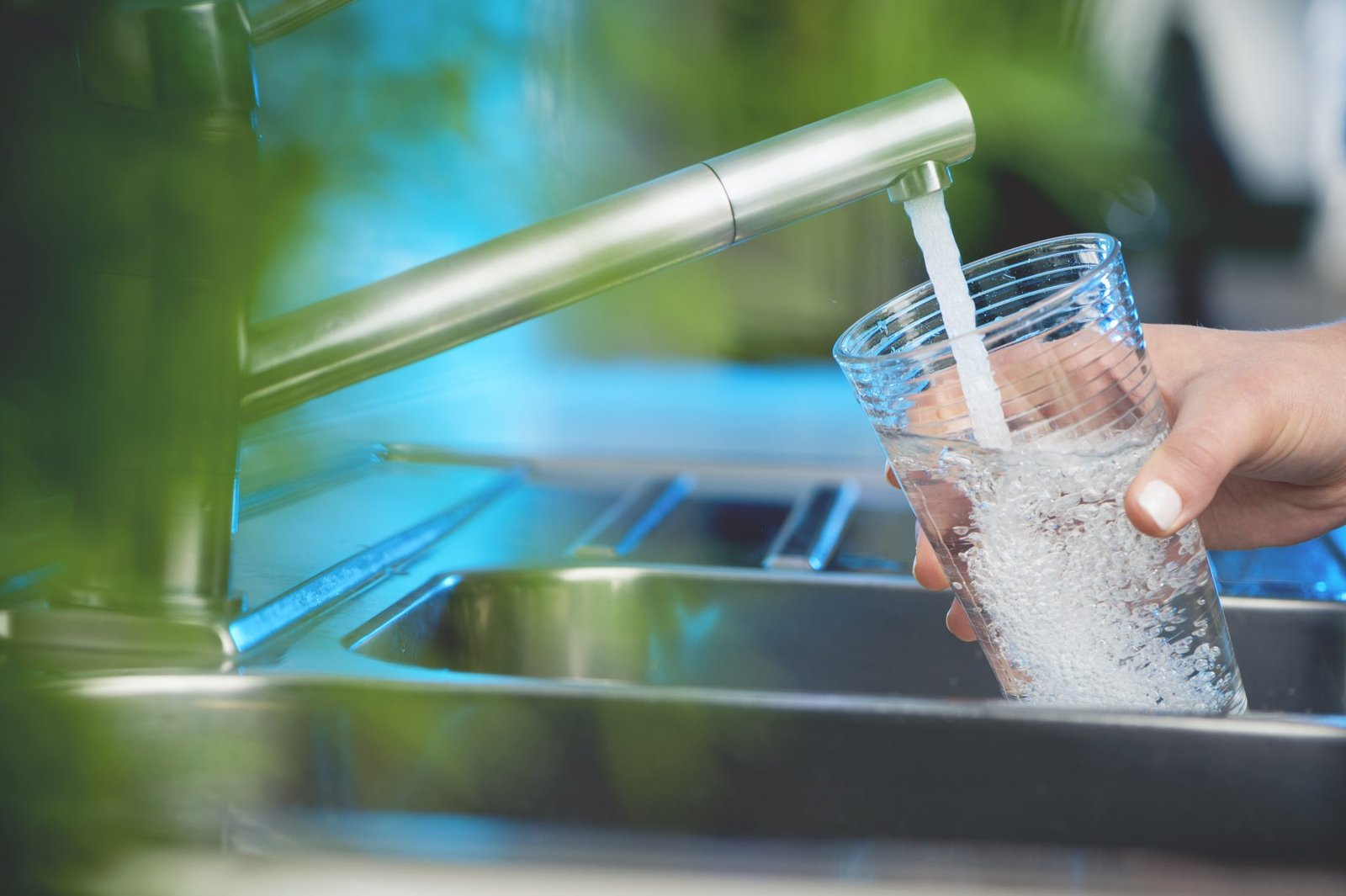
A point-of-use filtration system may be enough when drinking-water taste is the primary concern.
If hardness or another issue affects the entire building, broader treatment could be worth considering.
Again, the problem should determine the solution.
Whole-Building or Point-of-Use Treatment?
This is an important decision for commercial property owners.
Point-of-use treatment focuses on specific faucets or appliances. It can be practical when only drinking or cooking water requires treatment.
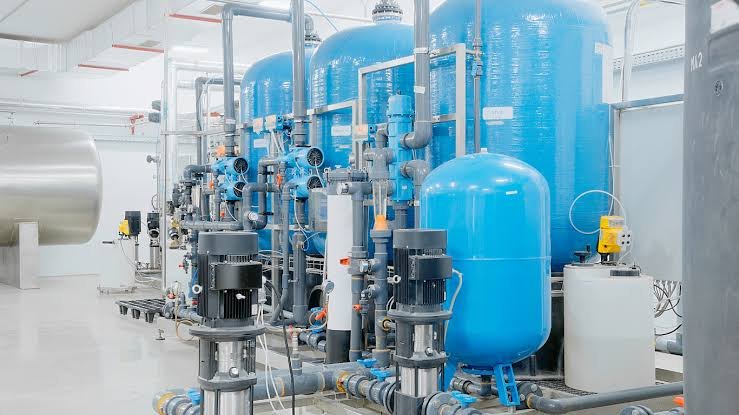
Whole-building treatment handles water as it enters the facility. This can be useful when water-quality issues affect showers, laundry, plumbing, appliances, and other fixtures throughout the property.
Neither option is automatically superior.
A business should consider the source of the problem, the size of the facility, water consumption, budget, and operational priorities before deciding.
Why Water Quality Can Affect Operating Costs
Poor water quality isn’t always immediately expensive, but its effects can accumulate.
Scale may increase cleaning requirements. Sediment can interfere with certain components. Filters may become clogged more quickly. Equipment may require more frequent service.
Over months and years, these small expenses can add up.
Appropriate treatment can help businesses manage certain water-related maintenance concerns and potentially improve the consistency of their operations.
However, it’s important to avoid making exaggerated promises. Treatment works best when it is designed for a clearly identified issue.
Choosing the Right Filtration Technology
Commercial filtration comes in many forms.
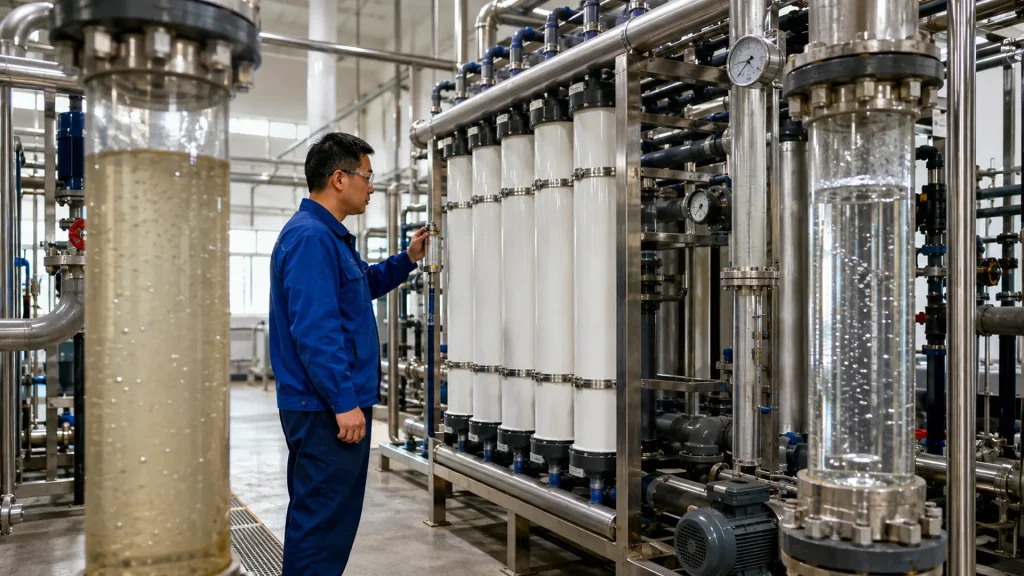
Sediment filters are designed to capture particles. Carbon filtration can reduce certain taste and odor compounds. Reverse osmosis uses a membrane and multiple filtration stages to reduce a range of dissolved substances.
Specialized systems may be required for particular contaminants.
The key question isn’t, “Which system has the most features?”
Instead, ask, “What does my water actually need?”
That question usually leads to a much better purchasing decision.
Proper Sizing Makes a Difference
Commercial water treatment equipment must be sized according to actual demand.
Consider average daily usage, peak flow, number of fixtures, pressure, and the type of business.
A system that’s too small may struggle when demand increases. An unnecessarily large system can cost more to purchase and operate.
Professional evaluation can help businesses avoid both situations.
It’s one of those details that may not seem exciting during planning, but it matters once the facility is busy.
Maintenance Should Never Be an Afterthought
Even the best treatment system needs routine care.
Filters have replacement schedules. Softening equipment may require salt. Treatment media can become exhausted. Components may need inspection or cleaning.
Businesses should keep a maintenance calendar and record important service dates.
This is especially important for facilities where water treatment is directly connected to production or customer experience.
A few minutes of planning can prevent an inconvenient surprise later.
Looking at the Long-Term Value
When comparing treatment systems, don’t focus only on the initial purchase price.
Consider installation, replacement parts, servicing, energy consumption, water usage, warranty coverage, and expected equipment life.
A system that costs less upfront may become expensive if maintenance is frequent. On the other hand, buying an oversized system with unnecessary features doesn’t make financial sense either.
The best investment is usually the one that provides appropriate treatment without creating unnecessary complexity.
Better Water Management Starts With Better Decisions
Commercial water treatment doesn’t have to be confusing.
Start by testing the water. Understand the conditions affecting the facility. Look at how much water the business uses, when demand peaks, and which equipment depends on that supply.
Then choose treatment technology that addresses the actual issue.
A well-planned system should quietly support the business rather than becoming another source of work. It can help improve everyday water quality, reduce certain maintenance challenges, and provide greater confidence in the water moving through the facility.
In a busy business environment, that’s exactly what good water management should do: work reliably in the background while everyone else gets on with the job.