You don’t need to be an expert to recognise when something is wrong with your household water. Perhaps the bathroom taps have developed stubborn white stains, your drinking water smells faintly of a swimming pool, or a glass filled from the kitchen tap looks strangely hazy. These little things can become part of daily life, but they’re worth paying attention to.
Water problems aren’t always serious, of course. Some affect taste, cleaning, and appliance performance rather than health. Others may indicate contamination that needs prompt investigation. The tricky part is knowing which situation you’re dealing with.
Fortunately, most household water concerns can be approached methodically. Understanding the possible causes, checking your supply, and choosing the right treatment can save money and help you avoid unnecessary worry.
Why Household Water Doesn’t Always Look or Feel Right
Water quality depends on several factors, including its source, local geology, treatment processes, and the condition of the pipes carrying it into your home. Even a treated municipal supply can be affected by building plumbing or poorly maintained storage tanks.
Groundwater presents its own challenges. Depending on the region, it may contain naturally occurring minerals, dissolved metals, or other substances that influence its taste, appearance, and suitability for drinking.
One of the most common complaints is hard water. It contains elevated levels of dissolved calcium and magnesium, which can leave chalky deposits on taps, showerheads, and kettle elements. Soap may also lather less easily, leaving a residue on clothes or bathroom surfaces.
Although hardness can be frustrating, it’s generally not considered a health concern simply because these minerals are present. The bigger issue is often scale buildup and the extra effort required to keep household fixtures clean.
A hardness test can help confirm whether minerals are responsible. If the problem is severe, a water softener may reduce scale and make everyday cleaning easier. However, softening doesn’t remove every contaminant, so it shouldn’t be confused with drinking-water purification.
Dealing With Chlorine Taste and Odor
Have you ever filled a glass of tap water, taken a sip, and noticed a chemical-like smell that reminded you of a swimming pool? For some households, chlorine taste and odor can make drinking water less appealing, even when the supply is being properly disinfected.
Chlorine is commonly used in municipal water treatment because it helps control harmful microorganisms. Its presence isn’t automatically a sign of poor water quality. In fact, maintaining an appropriate disinfectant residual helps protect water as it travels through the distribution system.
Still, the taste and smell can be unpleasant, particularly for people who are sensitive to them.
A properly selected activated carbon filter can reduce chlorine and improve the taste of drinking water. Some refrigerator filters and under-sink systems use this technology, although their effectiveness depends on the particular product and its condition.
Check the manufacturer’s specifications before buying. Not every filter reduces chlorine to the same extent, and cartridges need replacing according to the recommended schedule. An old or poorly maintained filter may not perform as expected.
If the smell appears suddenly, becomes unusually strong, or is accompanied by other changes, contact your water supplier rather than assuming a filter will solve the problem. The cause should be understood before treatment decisions are made.
What Causes Cloudy Water?
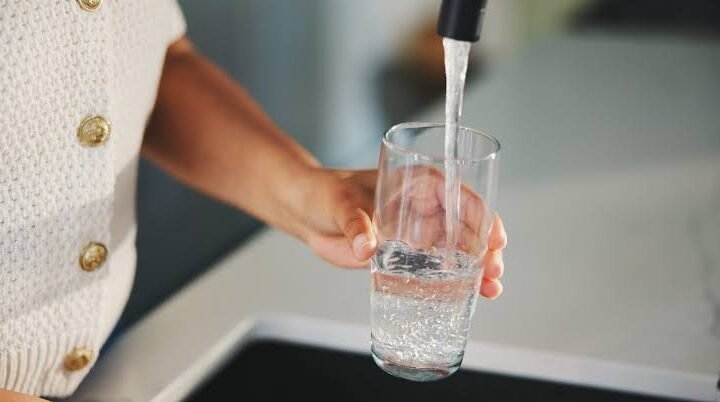
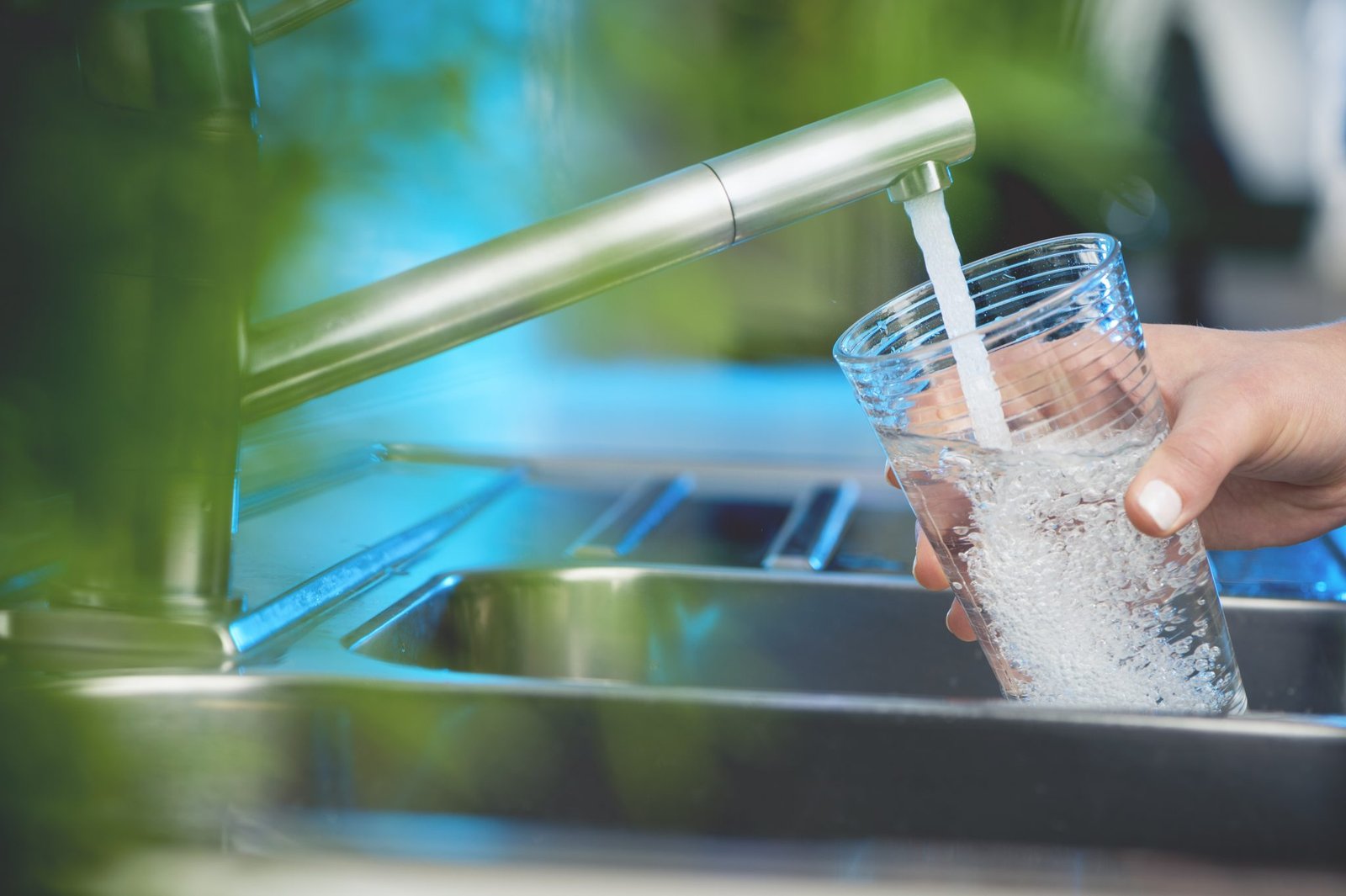
Turning on the tap and watching a glass fill with hazy water can be unsettling. In many cases, cloudy water is caused by tiny air bubbles trapped in the supply. This can happen after plumbing work, changes in pressure, or other routine disturbances.
A simple observation may offer a clue. Fill a clear glass and leave it undisturbed for a minute or two. If the cloudiness gradually clears from the bottom upwards, tiny air bubbles are a likely explanation.
However, this isn’t a definitive safety test. Cloudiness that persists, appears suddenly, or comes with unusual colour, smell, or particles deserves further investigation.
Sediment from pipes, disturbances in the supply network, and other water-quality problems can also affect clarity. If the water looks unusual throughout the property, contact your supplier for advice. If you use a private well or borewell, consider arranging appropriate testing.
Don’t automatically assume that a sediment filter is the answer. It may help when suspended particles are responsible, but it won’t address every possible cause of cloudy water.
If contamination is suspected, use an alternative safe water source until the problem has been assessed, following advice from your local water authority or public-health service.
Choosing the Right Water Treatment Method
Once you’ve identified the likely problem, selecting a solution becomes much easier. The key is matching the treatment technology to the substance you want to reduce.
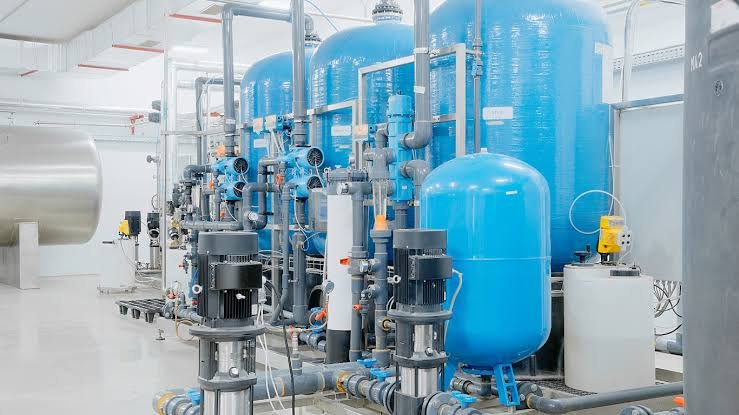
Sediment filters can capture particles such as sand and rust. Activated carbon filters are useful for reducing chlorine taste and certain organic compounds when designed for those purposes. Water softeners reduce hardness, while reverse-osmosis systems can reduce many dissolved substances, including certain salts and metals.
Ultraviolet disinfection is another option when microbial contamination needs to be addressed. It can inactivate many harmful microorganisms under appropriate operating conditions, but it doesn’t remove dissolved chemicals or metals.
These systems have different jobs, and buying one doesn’t guarantee that every water problem will disappear. A carbon filter, for instance, shouldn’t be relied upon to remove every dissolved contaminant. Likewise, a softener isn’t a substitute for disinfection when water contains harmful microorganisms.
In some homes, a combination of treatment methods may be appropriate. But there’s little value in installing several devices simply because a salesperson recommends them. Start with your water source, the problem you’re experiencing, and reliable information about what needs to be reduced.
Why Water Testing Matters
Water can look clear, smell normal, and still contain contaminants that aren’t detectable by the senses. That’s why testing is important when safety is a concern.
For municipal supplies, review the available water-quality report and contact the supplier if you notice an unexplained change. For borewells and private wells, a qualified laboratory can recommend tests based on local risks.
Depending on your location, testing may include hardness, pH, microbial contamination, nitrate, fluoride, arsenic, iron, or other relevant substances. Not every household needs every test, so choose the panel according to your water source and circumstances.
Home testing kits can provide useful preliminary information, but their limitations matter. For potentially harmful contaminants, laboratory testing is generally a more reliable basis for making decisions.
Pay attention to what the results actually measure. A total dissolved solids reading, for example, doesn’t identify individual contaminants or prove that water is safe to drink. Specific tests are needed to answer specific questions.
Simple Habits That Help Protect Water Quality
You don’t always need a major installation to improve household water management. Clean storage tanks regularly, keep drinking-water containers covered, and maintain plumbing in good condition.
Replace filters according to the manufacturer’s instructions and avoid assuming that a filter will continue working indefinitely. If the water source changes or a contamination concern arises, arrange additional testing.
It’s also worth keeping an eye on your appliances. Descaling a kettle, cleaning showerheads, and using suitable detergents can help manage some effects of hard water while you decide whether a softener is necessary.
These small steps won’t solve every problem, but they can help you spot changes early and keep household equipment working as intended.
Making Sense of Your Water Problems
Unusual water doesn’t always mean there’s a health hazard, but ignoring changes isn’t a good idea either. White mineral deposits, unpleasant chlorine smells, and persistent cloudiness each have different possible causes and may require different responses.
Start by observing the problem, checking your water source, and arranging appropriate testing when necessary. Choose treatment equipment based on verified performance, and remember that regular maintenance is just as important as the initial purchase.
Ultimately, good household water management is about understanding what’s coming through your tap. With reliable information and a practical approach, you can address common water concerns, avoid unnecessary expenses, and make more confident decisions about the water your household uses every day.